Associate Professor · Ross School of Business · University of Michigan
How narratives about worth and capacity shape who is heard, who leads, and who extends concern to others.
About
Affiliation
Stephen M. Ross School of Business
University of Michigan
Research Focus
Worthiness at Work · Leadership · Moral Concern · Behavioral Science
Editorial Roles
Associate Editor, Organizational Behavior and Human Decision Processes
Deputy Editor, Behavioral Science & Policy
Education
PhD, MPP, AM, Harvard University
BA, Korea University
Julia Lee Cunningham studies worthiness at work: how narratives about worth and capacity shape who is heard and valued, who steps up to lead, and who extends concern to others. Her work begins from the premise that people's capacity for compassion, leadership, and moral concern is not fixed but narratively constructed, enabled or suppressed by the stories people internalize about their own worth and the worth of others.
She is an Associate Professor of Management and Organizations at the Stephen M. Ross School of Business, University of Michigan, where she was awarded tenure in 2021.
Her work has appeared in Academy of Management Journal, Organization Science, Organizational Behavior and Human Decision Processes, Journal of Applied Psychology, Proceedings of the National Academy of Sciences, Journal of Personality and Social Psychology, and Psychological Science, and has been featured in The New York Times, The Wall Street Journal, National Geographic, Harvard Business Review, and MIT Sloan Management Review.
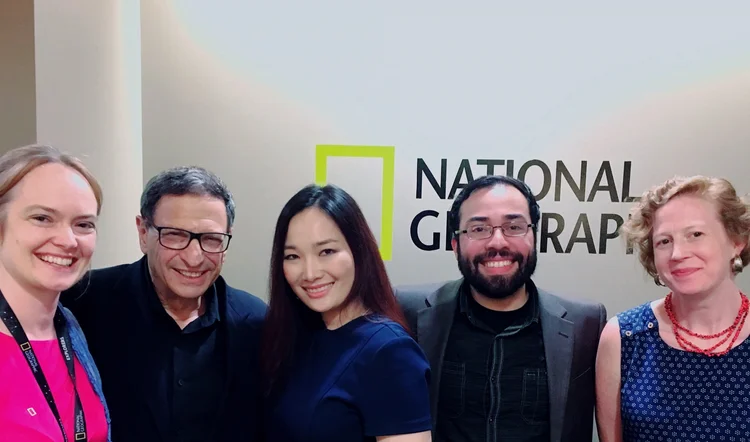
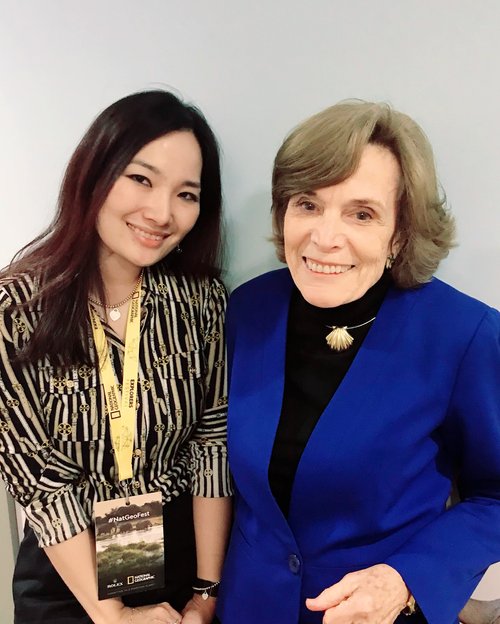
Julia serves as Associate Editor at Organizational Behavior and Human Decision Processes and Deputy Editor at Behavioral Science & Policy. She is a Governing Board Member of the Behavioral Science & Policy Association, and has held research affiliations at Harvard's Edmond J. Safra Center for Ethics and the Women and Public Policy Program. In 2018, she was selected as an Explorer and Fellow of the National Geographic Society. She also serves on the Advisory Council of Mass Audubon.
Julia received her BA in Political Science and International Relations from Korea University and her PhD, MPP, and AM degrees from Harvard University.

Research
How do narratives about worth and capacity shape when and how people lead, speak up, and extend concern to others?
Organizations are worthiness-negotiation systems, moral arenas where people's sense of being human is continuously affirmed or diminished. The narratives people internalize about their own worth and capacity determine whether they speak up, step into leadership, and sustain care for others.
Seeing oneself as a valued contributor: Social worth affirmation improves information sharing in teams
Academy of Management Journal, 2021
When new members join teams, they often suppress unique perspectives in pursuit of social acceptance. Across field experiments with Harvard Kennedy School executives and U.S. Air Force Academy cadets, social worth affirmation, receiving narratives from trusted others about times one has made valuable contributions, helped newcomers internalize a valued contributor identity and share more unique information.
Compassion fatigue as a self-fulfilling prophecy: Believing compassion is limited increases fatigue and decreases compassion
Psychological Science, 2023
People who believe compassion is finite experience more fatigue and provide lower-quality support; those who believe it is renewable experience less fatigue and help more effectively. The mechanism operates as a self-fulfilling prophecy: limited-mindset individuals form stronger expectations of fatigue, and these expectations produce the very depletion they feared. These mindsets are malleable: a brief podcast intervention reduced fatigue and increased willingness to help.
Do I dare? The psychodynamics of anticipated image risk, leader identity endorsement, and leader emergence
Academy of Management Journal, 2023
Why do some people struggle to internalize a leader identity? Across four studies (MBA teams, military cadets, employee-supervisor dyads, and a preregistered experiment), anticipated image risk, the belief that leading might harm how others see you, reduces leader identity endorsement, especially for those with fixed theories of leadership ability. Identity avoidance, not just aspiration, shapes who leads, reframing reluctance as sophisticated self-protection rather than motivational deficit.
Crafting public narrative to enable collective action: A pedagogy for leadership development
Academy of Management Learning & Education, 2023
If maladaptive narratives hinder leader identity, can constructive narratives build it? Leaders articulate a story of self (experiential sources of one's calling), a story of us (shared values binding a constituency), and a story of now (challenges requiring urgent response), grounding leadership development in emotional authenticity and identity work.
How do narratives shape who we see as deserving of help, and what we believe about the cost of doing the right thing? Lay theories and moral judgments guide ethical behavior at work in ways people rarely recognize.
Discerning saints: The moralization of intrinsic motivation and selective helping at work
Academy of Management Journal, 2023
Intrinsically motivated employees do not help indiscriminately. They moralize their motivation, converting a personal preference into a moral value, then selectively help colleagues who share that motivation while withholding help from those perceived as extrinsically driven. The finding challenges the positive view of intrinsic motivation by revealing an exclusionary dark side that disadvantages those who cannot afford to work for passion alone.
Lay theories of effortful honesty: Does the honesty-effort association justify making a dishonest decision?
Journal of Applied Psychology, 2019
Using a novel implicit association task, implicit associations between honesty and effort predicted dishonest behavior. Participants who read that honesty is effortful cheated more in an unrelated task. The belief provides a rationalization for dishonesty, but only in situationally weak contexts where norms are ambiguous.
Lay beliefs about homo economicus: How and why does economics education make us see honesty as effortful?
Academy of Management Learning & Education, 2023
Economics specialization cultivates utilitarian reasoning, which fosters beliefs that honesty is effortful, which in turn predicts willingness to use unethical tactics. The process is a self-fulfilling prophecy: economics teaches that humans are rational cost-benefit calculators, and students who internalize this framework begin reasoning about ethics accordingly.
Can the same narrative processes that shape worthiness at work broaden moral concern for nature and vulnerable populations? Work on climate, conservation, and diversity, supported by the National Geographic Society, the Erb Institute, and the Graham Sustainability Institute, suggests they can.
The moral significance of aesthetics in nature imagery
Psychological Science, 2022
Analyzing National Geographic's Instagram data and conducting experiments, image aesthetics predict both engagement and moral concern for nature through self-transcendent emotions: awe, inspiration, and perceptions of purity. Beautiful images do not merely capture attention; they elevate perception beyond self-interest and activate moral intuitions about the worthiness of what is depicted.
Biodiversity and cultural diversity are morally valued
British Journal of Social Psychology, 2025
People assign greater moral value to animals, plants, and languages when diversity is threatened, and sacrifice large numbers of individual entities to prevent diversity loss. A unified moral concern for diversity itself, independent of concern for individual species or instrumental benefits, underlies both domains.
Addressing climate change with behavioral science: A global intervention tournament in 63 countries
Science Advances, 2024
Testing 11 expert-crowdsourced interventions across 59,440 participants from 63 countries, the interventions' effectiveness was small and largely limited to non-climate skeptics. No intervention increased more effortful behavior, underscoring that behavioral climate interventions must be tailored to audiences and target behaviors.
Effects of communicating the rise of climate migration on public perceptions of climate change and migration
Journal of Environmental Psychology, 2024
Climate migration messages increase concern about climate change while simultaneously heightening anti-immigrant sentiment in some populations. Personal narratives of migrants did not overcome ideological filters; political identity overwhelmed message effects.
An examination of how six reasons for valuing nature are endorsed and associated with pro-environmental behavior across 12 countries
Scientific Reports, 2023
Surveying 12,000 people across 12 countries, moral- and identity-based reasons for valuing nature were the strongest predictors of pro-environmental behavior, yet people were least likely to endorse them. The reasons most associated with action garnered the weakest support.
Current & Forthcoming Work
Humanization at Work
Supported by a $1.5M University of Michigan Biosciences Initiative award, this program studies how person-centered rituals, individuating customer-employee connections, and employment relationship narratives can affirm employees' personhood.
AI and Human Worth
AI is changing how people experience their own value at work. How do narratives about AI shape employees' sense of worth? And what can organizations do to affirm human significance when automation redefines what counts as a contribution?
Belonging & Connection at Work
Loneliness at work is widespread and growing. How do narratives about relationships shape whether employees experience belonging or isolation? This work identifies practices that foster connection without manufacturing superficial community.
Teaching
Bargaining and Influence Skills
Developing Global Competency
Behavioral Theory in Management
The Anatomy of Research: Process & Practice
When qualified women resist the leader label
Why your love for work can alienate your colleagues
Are you afraid to identify as a leader?
The benefits of saying nice things about your colleagues
Reclaim your commute
Service
Events
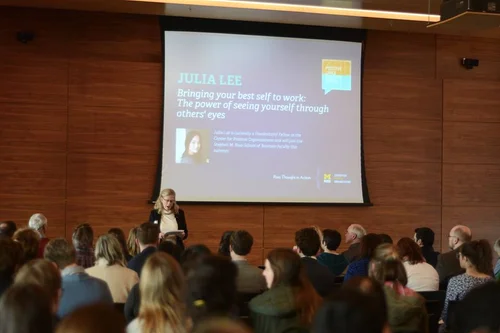
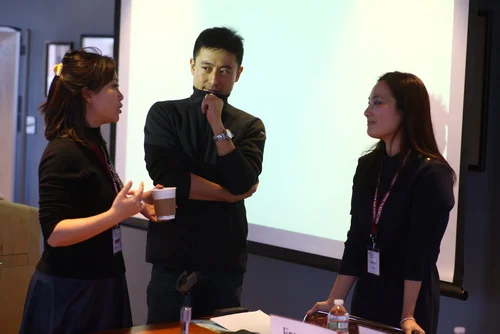
Photos from research, speaking, and field work, alongside selected talks and speaker series.
Selected Talks & Speaker Series
Contact
For speaking inquiries, media requests, or research collaborations, please reach out by email.
Download CVAddress
Stephen M. Ross School of Business
University of Michigan
701 Tappan Avenue
Ann Arbor, MI 48104
Institutional Profile